
“Know your audience” is a central tenet of any communications strategy—and healthcare communications and IT are no exception. And that leads to two important questions all healthcare IT, marketers and communicators must ask themselves:
 But there’s more to understanding the Millennial patient profile (and young patient engagement) than their lifelong exposure to the Internet and smartphones. Consider these facts HIMMS shared about Millennial patients:5
Guideway Care is a cloud-based technology and services company that improves profitability and patient outcomes for hospitals and practices through end-to-end patient engagement solutions backed by clinical and non-clinical teams. Its HIPAA-compliant, SaaS platform improves care team workflows, automates patient communication and tracks patient progress to optimize the patient journey. Since 2004, leading healthcare providers have trusted Guideway Care to help acquire, manage and engage patients through complex episodes of care. 1 Generational Factors in Patient Engagement 2 Understanding Generational Differences in Patient Engagement 3 Digital Communication Helps Young Patient Engagement 4 Digital Clinical Communication (DCC) – Health Economic Findings of the LYNC study 5 Generational Factors in Patient Engagement 6 Timely Digital Patient-Clinician Communication in Specialist Clinical Services for Young People: A Mixed-Methods Study (The LYNC Study)
• How well do you really know your patients in the general age range of 18 to early 30s (interchangeably known as “Millennials” and “Generation Y”?
• How well does that knowledge influence your young patient engagement strategies?
The “Largest Projected Patient Population”
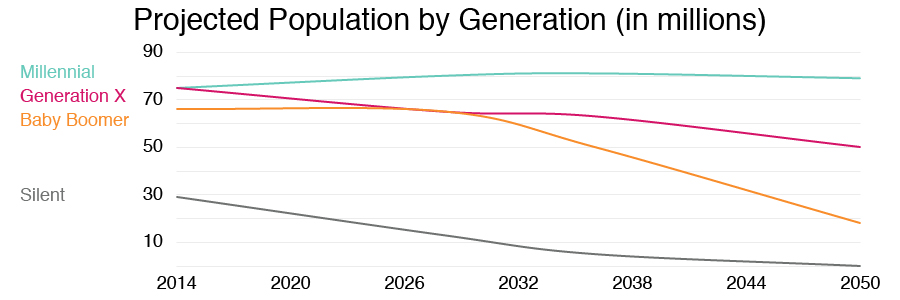
Perhaps a better descriptor for Millennials or Generation Y is “The Largest Projected Patient Population.” According to Pew Research Center data, Millennials—which Pew defines as “the population ages 18–34 as of 2015” that is now in the 21–37 range in 2018—already represent the largest generational population. But, as older generations age and their population sizes continue to decline, the Millennial population is projected to grow and remain steady until 2050.1
A Matter of Improving Young Patient Outcomes
Questions about “knowing your audience” are important because they put a spotlight on what is called generational marketing, which is a vital component of a healthy and comprehensive patient engagement strategy—and bottom line. For young patient engagement, this couldn’t be more true. As Patient Engagement IT perfectly said:“Providers need to better understand the populations they serve and the threats to their business to remain competitive in their market and best manage their patients’ needs.”2These questions are also about more than just ensuring your healthcare marketing strategy is hitting its most important demographic targets. Instead, it’s equally a matter of improving outcomes for young patients that are demonstrating a unique set of expectations, habits and tendencies for their healthcare. As Digital Journal explained:
“There is a concern among healthcare professionals that young people, particularly those with long-term health conditions, tend to disengage from health services. The outcome is a reduction in health outcomes.”3If disengagement is a problem, then simple logic would dictate engagement is a solution. But is the solution simple to achieve?
The Millennial Patient Profile: Not What You May Have Expected
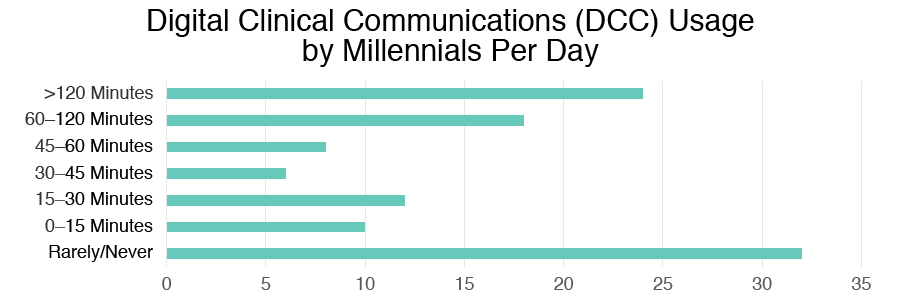
Things could be relatively simple if traditional or current patient engagement practices for older generations could be trusted for engaging with younger patients. The reality is the Millennial patient profile has some unique features that make it markedly different from other generations, which means they require their own sets of engagement practices. One valid assumption is that as a tech-savvy demographic, Millennials are reliant upon technology for healthcare purposes. This was verified in the Warwick University-led LYNC study, which looked at how digital technologies were used for clinical communications between health professionals and Millennials. It revealed patients used various “DCCs” (digital clinical communications like e-mail, text messages and VoIP) for a per-day median 45 minutes and a maximum of nine hours.4But there’s more to understanding the Millennial patient profile (and young patient engagement) than their lifelong exposure to the Internet and smartphones. Consider these facts HIMMS shared about Millennial patients:5
• 11 percent of are uninsured
• 17 percent do not think about cost when choosing a physician
• 41 percent reported they ask for estimates before receiving medical services
What emerges is a patient/customer profile (which HIMMS calls a “generational archetype”) that:• Uses and appreciates technology
• Values health information and gets it from multiple sources
• Has or expects positive personal relationship with his/her physician
• Will find other caregivers after poor experiences
How to Use DCCs for Millennial Patient Engagement
A solid Millennial patient engagement plan needs to be more than just passively adopting and enabling digital clinical communication channels. Instead, research is showing that there are significant advantages for both patient and caregiver when DCCs are used with precision to enhance established connections. According to a Journal of Medical Internet Research article about the LYNC study:“…findings suggest that benefit is most likely, and harms are mitigated, when digital communication is used with patients who already have a relationship of trust with the clinical team, and where there is identifiable need for patients to have flexible access, such as when transitioning between services, treatments, or lived context. Clinical teams need a proactive approach to ethics, governance, and patient safety.”6The JMIR identified the following DCCs and their best functionality in this regard: • Telephone: Urgent communications • Text messages: Appointment reminders for asking quick questions • E-mail: More complex or lengthy information and links to resources However, for bad or upsetting news, JMIR said classic face-to-face interaction is the best communication method. So, with a better understand of how young people pursue their health care choices, how do you now feel about the two questions asked at the onset? If you are having any doubts about your Millennial patient engagement capabilities or strategy, now is the time to start evaluating and improving them.
Guideway Care is a cloud-based technology and services company that improves profitability and patient outcomes for hospitals and practices through end-to-end patient engagement solutions backed by clinical and non-clinical teams. Its HIPAA-compliant, SaaS platform improves care team workflows, automates patient communication and tracks patient progress to optimize the patient journey. Since 2004, leading healthcare providers have trusted Guideway Care to help acquire, manage and engage patients through complex episodes of care. 1 Generational Factors in Patient Engagement 2 Understanding Generational Differences in Patient Engagement 3 Digital Communication Helps Young Patient Engagement 4 Digital Clinical Communication (DCC) – Health Economic Findings of the LYNC study 5 Generational Factors in Patient Engagement 6 Timely Digital Patient-Clinician Communication in Specialist Clinical Services for Young People: A Mixed-Methods Study (The LYNC Study)