Author: web_developers

5 Patient Access Trends Defining Healthcare in 2026

Patient access is the front door to your organization, and right now it is mostly broken. Calls go unanswered. Patients wait weeks for appointments they could have scheduled in five minutes. After-hours questions push people to the ER who never needed to be there. The 2026 conversation has shifted from “how do we answer the phone” to “how do we move patients toward completed action.”

Five trends are driving that shift.

1. AI orchestration with human escalation

For two decades, healthcare chased automation as a cost play. Replace the agent. Reduce the call. The numbers looked good on paper and the patients churned out the back. The 2026 model is different. AI now handles routing, predictive risk scoring, timing, and next best action decisions. A trained Agent or Nurse takes the call when empathy, clinical judgment, or trust matters more than speed.

This is not a chatbot model. It is a layered system where AI does what it does well, including continuous monitoring, pattern recognition, and personalization at scale. Trained humans do what they do well, including reading distress, navigating ambiguity, and building commitment.

What to look for: vendors who talk about AI replacing staff are selling 2018 thinking. Vendors who talk about AI making staff more effective are aligned with where the field is going.

2. Activation replacing engagement

Engagement metrics have plateaued across the industry. Patient portals get logins. Reminder texts get reads. Appointment confirmations get clicks. None of that is the same as a patient showing up, taking the medication, or completing the follow-up.

Behavioral science is reframing the question. The new metric is not “did the patient interact with the touchpoint” but “did the patient complete the next step.” We call this activation. Behavioral science techniques like motivational interviewing, choice architecture, and reciprocity make activation operational, not aspirational.

Partner organizations using access models built on activation have achieved 30% ER diversion and 98% appointment adherence. Engagement programs do not produce those numbers. Activation programs do.

3. After-hours coverage as a strategic asset

After-hours used to be a checkbox. Cover the phones from 5 PM to 8 AM, hand the call to a service, hope the protocols are followed. The patient access leaders winning in 2026 are treating after-hours as a strategic asset.

Why? Because most ER diversion happens after-hours. Most readmission risk surfaces after-hours. Most HCAHPS-driving moments happen after-hours, when the patient is anxious, alone, and trying to decide whether to drive to the emergency room.

When licensed Nurses using gold-standard Schmitt-Thompson protocols handle those moments, partner organizations have seen 30% ER diversion and a 76% increase in HCAHPS doctor communication scores. That is not a metric about how fast you answer the phone. That is a strategic outcome.

4. SDOH-integrated workflows

CMS has cited that 50% of non-compliance stems from social determinants of health. Transportation. Finances. Housing instability. Language barriers. Health literacy. Patients are not skipping appointments because they do not care. They are skipping because they cannot get there.

The trend in 2026 is access workflows that surface these barriers proactively, not reactively. We use a Stressor Inventory process to uncover non-clinical blockers in the first conversation, then mobilize solutions before the patient even asks. That changes the math on no-shows, readmissions, and care gap closure.

Vendors without an SDOH-aware model are going to lose ground in value-based contracts.

5. Contact center consolidation

Most health systems are running three to five separate call operations: the main line, the nurse triage line, the after-hours service, the practice front desks, and sometimes a payer-facing line. Each has its own staff, its own protocols, its own KPIs, and its own drop-off points where patients fall out of the journey.

The consolidation trend is real. One team. One protocol layer. One activation methodology. One technology integration with the EHR. This is not a cost play, although it usually saves money. It is a continuity play. Patients stop falling between the cracks because there are no cracks.

What this means for your organization

Patient access is no longer a back-office function. It is the operational front line of value-based care, HCAHPS performance, and patient retention. The organizations winning in 2026 are not the ones with the prettiest portals or the fastest IVR. They are the ones whose access operations actually move patients toward completed action.

If your access operation still measures itself on hold time and abandonment rate, you are measuring the wrong things.

Frequently Asked Questions

What is patient access in healthcare?

Patient access is the set of operations that connect a patient to care, including scheduling, insurance verification, nurse triage, after-hours support, and post-discharge follow-up. In 2026, leading organizations have expanded the definition to include whether the patient actually completes the next step, not just whether the touchpoint occurred.

What are the biggest trends in patient access in 2026?

The five trends shaping patient access in 2026 are AI orchestration with human escalation, activation models replacing engagement metrics, after-hours coverage treated as a strategic asset, social determinants of health integrated directly into workflows, and contact center consolidation across previously siloed operations.

Why is engagement no longer the right metric for patient access?

Engagement measures interaction. Activation measures completed action. Patients can engage with portals, texts, and reminders without ever following through on care. Behavioral science research and partner outcome data show that activation models, which apply techniques like motivational interviewing and choice architecture, produce measurable improvements in adherence, ER diversion, and readmission reduction.

How does AI fit into modern patient access operations?

AI handles continuous monitoring, predictive risk scoring, timing optimization, and next best action decisions. It does not replace the trained Agent or Nurse who takes the call. The 2026 model uses AI to make humans more effective, not to remove them. The combination handles personalization at a scale that neither AI alone nor humans alone can achieve.

The Future of Behavioral Science in Healthcare: From Engagement to Activation

Healthcare has spent two decades trying to “engage” patients. Patient portals. Reminder apps. Educational pamphlets. Wearables. The investment was massive. The outcomes are flat. Readmission rates have barely moved. Appointment no-shows still average 15 to 20%. Medication adherence sits around 50%.

Engagement, it turns out, was the wrong target.

The future of behavioral science in healthcare is not about more interactions or better dashboards. It is about a single shift: from engagement to activation. From “did the patient interact” to “did the patient complete the next step.”

What behavioral science is

Behavioral science is the study of why people do what they do, especially when their stated intentions and their actions diverge. In healthcare, that gap is the entire problem. Patients say they will take the medication. They do not. They say they will come to the follow-up. They do not. They say they understand the discharge instructions. They do not.

Closing that gap is not a communication problem. It is a behavioral problem. And behavioral problems require behavioral solutions.

Three disciplines that matter

The behavioral science techniques driving the next decade of healthcare cluster into three disciplines.

Foundational techniques: establishing the why

Foundational techniques surface the patient’s own reasons for following through and structure the path forward. Motivational interviewing draws out why the patient wants to take the action, then anchors care decisions to those reasons. Choice architecture presents options in a way that makes the right path the path of least resistance. These techniques work because they replace external pressure with internal motivation.

Cognitive techniques: reducing the friction of action

Cognitive techniques change how the patient perceives the action itself. Contrast and framing reshape the way risk and reward are understood. Micro-commitments break overwhelming care plans into small, completable steps that build momentum. Smart defaults and pre-scheduled actions mitigate decision fatigue. The friction between intention and action drops, and the patient moves forward.

Relational techniques: sustaining follow-through

Relational techniques sustain commitment over time. Reciprocity and goodwill, what we call going the extra mile, builds the kind of trust that makes patients say yes to the next call. Balanced authority blends clinical confidence with shared decision-making. Relational and timely communication keeps the patient feeling supported, not surveilled.

These nine techniques are not theoretical. We operationalize them across a single framework called Motivational Patient Guidance.

Why behavioral science is the future

Two forces are pushing behavioral science from academic interest to operational priority.

The first is value-based care. When reimbursement is tied to outcomes, the gap between intention and action becomes a financial problem. CMS has cited that roughly 50% of non-compliance stems from non-clinical barriers. You cannot close care gaps, hit quality measures, or capture risk adjustment data without addressing the behavioral and social drivers that keep patients from following through.

The second is AI. AI alone is not the answer. Algorithms cannot read distress over the phone, build trust with a hesitant caregiver, or know when a confident “I’ll be there” is actually a polite no. But AI plus behavioral science is something new. AI handles continuous monitoring, motivational profiling, and timing. Trained humans handle the moments where empathy, judgment, and connection matter. The combination unlocks personalization at a scale humans alone could never achieve.

What this looks like in practice

Take post-discharge follow-up, a high stakes activation moment. The standard model is a generic call within 48 hours, often missed, often left as a voicemail.

Now picture the activation model. The patient’s motivational profile predicts which behavioral technique will work best. The system selects the right channel and the right timing. An Activation Agent calls when the patient is most likely to answer. The conversation starts with motivational interviewing to surface the patient’s actual concerns, not the standard checklist. The Stressor Inventory uncovers transportation, financial, or caregiver barriers. The Agent mobilizes solutions before the patient asks. By the end of the call, the patient has a confirmed next appointment, a transportation plan, and a personal reason to follow through.

Partner organizations using this model have seen 35% fewer readmissions, 31% higher patient satisfaction, and a 5x activation rate increase within 90 days.

That is what happens when behavioral science stops being a workshop and becomes infrastructure.

Action over interaction

Engagement was a metric problem. Activation is the work. The healthcare organizations that will win the next decade are the ones who stop measuring touchpoints and start measuring completed actions, who stop asking “did the patient interact” and start asking “did the patient do the thing.” Behavioral science is the discipline that closes that gap, and it is the future of healthcare operations.

Frequently Asked Questions

What is behavioral science in healthcare?

Behavioral science in healthcare is the application of psychology, behavioral economics, and social science research to close the gap between what patients say they will do and what they actually do. It uses techniques like motivational interviewing, choice architecture, contrast and framing, and reciprocity to drive patient follow-through on appointments, medications, and care plans.

How is behavioral science different from patient engagement?

Patient engagement measures whether a patient interacted with a touchpoint, including portal logins, text reads, or reminder clicks. Behavioral science focuses on whether the patient completed the next step in their care. We call this activation. Engagement is a measure of attention. Activation is a measure of action.

What behavioral science techniques are used in patient activation?

Patient activation uses nine techniques across three disciplines. Foundational techniques include motivational interviewing and choice architecture. Cognitive techniques include contrast and framing, micro-commitments, and decision fatigue mitigation. Relational techniques include reciprocity and goodwill, balanced authority, and relational and timely communication. Together they form the Motivational Patient Guidance framework.

How do AI and behavioral science work together in healthcare?

AI handles continuous patient monitoring, motivational profiling, predictive risk scoring, and timing of outreach. Trained Agents and Nurses apply behavioral science techniques in the conversations where empathy and judgment matter. The combination delivers personalization at a scale that humans alone could not provide and a level of human connection that AI alone cannot replicate.

young patient engagement

The Importance of a Strong Millennial and Young Patient Engagement Strategy

“Know your audience” is a central tenet of any communications strategy—and healthcare communications and IT are no exception. And that leads to two important questions all healthcare IT, marketers and communicators must ask themselves:

• How well do you really know your patients in the general age range of 18 to early 30s (interchangeably known as “Millennials” and “Generation Y”?

• How well does that knowledge influence your young patient engagement strategies?

The “Largest Projected Patient Population”

Perhaps a better descriptor for Millennials or Generation Y is “The Largest Projected Patient Population.” According to Pew Research Center data, Millennials—which Pew defines as “the population ages 18–34 as of 2015” that is now in the 21–37 range in 2018—already represent the largest generational population. But, as older generations age and their population sizes continue to decline, the Millennial population is projected to grow and remain steady until 2050.1 Population Chart

A Matter of Improving Young Patient Outcomes

Questions about “knowing your audience” are important because they put a spotlight on what is called generational marketing, which is a vital component of a healthy and comprehensive patient engagement strategy—and bottom line. For young patient engagement, this couldn’t be more true. As Patient Engagement IT perfectly said:
“Providers need to better understand the populations they serve and the threats to their business to remain competitive in their market and best manage their patients’ needs.”2
These questions are also about more than just ensuring your healthcare marketing strategy is hitting its most important demographic targets. Instead, it’s equally a matter of improving outcomes for young patients that are demonstrating a unique set of expectations, habits and tendencies for their healthcare. As Digital Journal explained:
“There is a concern among healthcare professionals that young people, particularly those with long-term health conditions, tend to disengage from health services. The outcome is a reduction in health outcomes.”3
If disengagement is a problem, then simple logic would dictate engagement is a solution. But is the solution simple to achieve?

The Millennial Patient Profile: Not What You May Have Expected

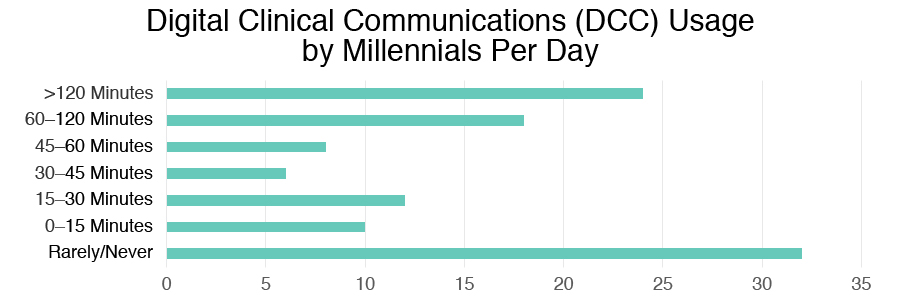
Things could be relatively simple if traditional or current patient engagement practices for older generations could be trusted for engaging with younger patients. The reality is the Millennial patient profile has some unique features that make it markedly different from other generations, which means they require their own sets of engagement practices. One valid assumption is that as a tech-savvy demographic, Millennials are reliant upon technology for healthcare purposes. This was verified in the Warwick University-led LYNC study, which looked at how digital technologies were used for clinical communications between health professionals and Millennials. It revealed patients used various “DCCs” (digital clinical communications like e-mail, text messages and VoIP) for a per-day median 45 minutes and a maximum of nine hours.4The Importance of a Strong Millennial and Young Patient Engagement StrategyBut there’s more to understanding the Millennial patient profile (and young patient engagement) than their lifelong exposure to the Internet and smartphones. Consider these facts HIMMS shared about Millennial patients:5

• 11 percent of are uninsured

• 17 percent do not think about cost when choosing a physician

• 41 percent reported they ask for estimates before receiving medical services

What emerges is a patient/customer profile (which HIMMS calls a “generational archetype”) that:

• Uses and appreciates technology

• Values health information and gets it from multiple sources

• Has or expects positive personal relationship with his/her physician

• Will find other caregivers after poor experiences

How to Use DCCs for Millennial Patient Engagement

A solid Millennial patient engagement plan needs to be more than just passively adopting and enabling digital clinical communication channels. Instead, research is showing that there are significant advantages for both patient and caregiver when DCCs are used with precision to enhance established connections. According to a Journal of Medical Internet Research article about the LYNC study:
“…findings suggest that benefit is most likely, and harms are mitigated, when digital communication is used with patients who already have a relationship of trust with the clinical team, and where there is identifiable need for patients to have flexible access, such as when transitioning between services, treatments, or lived context. Clinical teams need a proactive approach to ethics, governance, and patient safety.6
The JMIR identified the following DCCs and their best functionality in this regard: Telephone: Urgent communications Text messages: Appointment reminders for asking quick questions E-mail: More complex or lengthy information and links to resources However, for bad or upsetting news, JMIR said classic face-to-face interaction is the best communication method. So, with a better understand of how young people pursue their health care choices, how do you now feel about the two questions asked at the onset? If you are having any doubts about your Millennial patient engagement capabilities or strategy, now is the time to start evaluating and improving them.
Guideway Care is a cloud-based technology and services company that improves profitability and patient outcomes for hospitals and practices through end-to-end patient engagement solutions backed by clinical and non-clinical teams. Its HIPAA-compliant, SaaS platform improves care team workflows, automates patient communication and tracks patient progress to optimize the patient journey. Since 2004, leading healthcare providers have trusted Guideway Care to help acquire, manage and engage patients through complex episodes of care. 1 Generational Factors in Patient Engagement 2 Understanding Generational Differences in Patient Engagement 3 Digital Communication Helps Young Patient Engagement 4 Digital Clinical Communication (DCC) – Health Economic Findings of the LYNC study 5 Generational Factors in Patient Engagement 6 Timely Digital Patient-Clinician Communication in Specialist Clinical Services for Young People: A Mixed-Methods Study (The LYNC Study)
Why Long-Term Patient Engagement Tools Are Worth It | Guideway Care - Sequence of Activation Blog

Why Long-Term Patient Engagement Tools Are Worth It

Key Advantages Include Improved Patient Management and Outcomes

As a provider of patient engagement tools, we were a bit dismayed when we read the NEJM Catalyst article, “Patient Engagement Survey: Technology Tools Gain Support—But Cost Is a Hurdle.”1

Although we appreciated its findings for why healthcare decision-makers and stakeholders believe long-term patient engagement tools can deliver many benefits, we weren’t as certain about the findings about cost and other barriers.

We know they are worth it. But, don’t take our word for it!

Before we look at the NEJM Catalyst survey data, let’s first look at some real-world examples of where patient engagement tools have proven to be invaluable to both healthcare providers and patients.

Getting Great Results with Patient Engagement Tools: The Walgreens Reports

“Consumers are increasingly more engaged in their own healthcare and wellness. Digital technology that enables easy data tracking of healthy behaviors—combined with incentives and trusted professional support—provide additional motivation for our customers to more easily manage their health.”

Harry Leider, M.D.

Chief Medical Officer for Walgreens

Some of the reports Walgreens has published in recent years attribute their use of patient engagement tools to better-than-average patient satisfaction and outcome scores. Two were particularly noteworthy.

The first was their 2013 case study, Measuring Performance in Delivering Quality Care.2 In it, they linked “strong engagement levels” with “[Healthcare Effectiveness Data and Information Set] scores that were significantly above national HEDIS benchmarks” for three commonly treated conditions. Their key engagement measures included:

• The amount of time care providers spend with the patient

• Effective listening and attention from the provider

• Clear explanation of health matters by the provider

Walgreens said patient engagement tools produce positive results because they help patients improve:

• Personal ownership in their care regimen

• Compliance with taking their medications as prescribed

• Likelihood to follow doctor’s orders through to a strong recovery and better long-term health

• Loyalty to a care provider—which results in returning as needed for follow-up care and recommending the care provider to friends and family

The second came in 2016 when they published findings that supported their belief “automated health tracking can significantly improve long-term health engagement.”3

This time, they analyzed “Walgreens Balance Rewards for healthy choices® (BRhc)…a self-monitoring program that allows members to [automatically] track health activities and receive incentives for continued tracking and healthy behaviors.” Compared to participants that manually tracked their activities, BRhc users engaged four times longer and averaged 20 weeks of participation.

Neither of these reports mentioned anything about cost or why Walgreens might have been hesitant to embrace and develop patient engagement tools. Instead, they seemed to be confident in the potential benefits and satisfied with the positive results.

So, Where’s the Problem with Costs for Patient Engagement Tools?

Patient Engagement Technology Barriers Chart

The NEJM Catalyst survey asked executives, clinical leaders and clinicians what they thought were the top three benefits of using digital patient engagement tools. The highest-rated benefits included:

• Supporting patients in efforts to be healthy (67%)

• Providing input to providers on how patients are doing when not in clinic (60%)

• Create ecosystem that allows for better predictive analytics around patient health and more timely intervention (51%)

One takeaway is that there is the belief patient engagement tools do have some practical advantages. If there’s a barrier for their widespread adoption, it must be cost, right? Isn’t it always?

Although the NEJM Catalyst article’s title clearly indicates cost is the problem, its data isn’t as clear. In fact, if you ignore the four barriers that are cost-related, you are left with six that are either:

Highly subjective: Cost-related barriers like “not covered by insurance” or “lack of funding by providers” are easy to accept and hard to dispute. But others like “unclear benefit” and “complexity of use” have nothing to do with “cost” and are easily refutable…case in point: the Walgreens examples!

Easily solved: If “lack of provider recommendations” and “not currently available as off-the-shelf tools” are barriers, you can trust that makers and sellers would change that very quickly if they truly believed they were the main reasons their products were not selling! Again, neither of these are cost-related barriers.

For both individuals and industries, cost is always a factor in adopting new technologies—early adoption is often an expensive and scary endeavor. However, digital patient management tools may always be evolving, but they are not new…and we’re well past of not having confidence in them because of cost.


Guideway Care is a cloud-based technology and services company that improves profitability and patient outcomes for hospitals and practices through end-to-end patient engagement solutions backed by clinical and non-clinical teams. Its HIPAA-compliant, SaaS platform improves care team workflows, automates patient communication and tracks patient progress to optimize the patient journey. Since 2004, leading healthcare providers have trusted Guideway Care to help acquire, manage and engage patients through complex episodes of care.

1 Patient Engagement Survey: Technology Tools Gain Support — But Cost Is a Hurdle

2 Measuring Performance in Delivering Quality Care

New Research from Walgreens and Scripps Translational Science Institute Demonstrates the Value of Automated Health Tracking

2018 Healthcare Trends in Marketing, CRM & IT | Guideway Care - Sequence of Activation Blog

2018 Healthcare Trends We Expect for Marketing, IT and CRM

It’s actually not that hard to make confident predictions about what will be the key trends for healthcare marketing and healthcare CRM in 2018, especially if you closely follow what’s going on in the healthcare industry. The trick is to take a few moments to step back from daily observations and to try to find common themes that are emergent. With that in mind, here are some trends we are anticipating for 2018!

Modifying Healthcare Marketing for Millennials

In 2018, healthcare marketing will take unprecedented steps to market healthcare to Millennials. There’s no reason to debate about the precise years for when this generation was born. The bottom line is most (if not all) Millennials are now solidly in adulthood, and that means they are the newest demographic in healthcare. There’s also no reason to discuss the finer points of what makes Millennials Millennials. All that needs to be said is they play by a different set of rules when it comes to how they make decisions and engage with brands—and this is a riddle healthcare marketers will be attempting to solve in 2018.

More Mobile-First

In 2018, healthcare marketing and IT will take unprecedented steps to adopt “Mobile-First.” We’re now in an era where it’s not enough to say “mobile healthcare” will be a trend. That’s already happened. In our most recent blog, “Five Key Mobile Website Design Tips for Hospitals and Clinics,” we touched on the subject of “mobile-first” as it relates to a major Google shakeup for healthcare SEO, and you can expect for us to talk more about this in 2018. Even if you aren’t familiar with the concept, the “mobile-first” term isn’t hard to discern: It’s the best practice of prioritizing mobile technologies over others. For SEO, it means search engines will first look to the mobile version of a Website to determine who gets the best SERP (search engine results) rankings. Mobile-first isn’t just about SEO though. Virtually anything that is part of a patient’s mobile device UX (user experience) — social media, apps, widgets, videos, etc. — will need to look and feel like it was a priority and not an afterthought.

IoT, mHealth and Telehealth Waits for Cybersecurity Improvements

In 2018, healthcare IT will take unprecedented steps to improve cybersecurity and open more doors for new medical technologies that can radically improve outcomes and revenues. We are also in an era where healthcare is grappling with with having both too much and too little—and it’s potentially stalling something great advances in healthcare. First, there’s too much access to patient information. On one hand, that’s wonderful—and it ties in nicely with more and more patients using the Internet (especially mobile devices) to find healthcare providers, engage with caregivers and improve their outcomes. On the other hand, access and information has put many hospitals at risk because there’s too little cybersecurity. (Unfortunately, the “ransomware” trend from the past couple years is probably going to continue in 2018.) Meanwhile, the medical device industry is aching to exploit the vast advantages of IoT (Internet of Things), mHealth (mobile health), telehealth and other platforms that can have monumental benefits for healthcare, both in terms of providing more and better care while reducing costs. The conflict is with how these innovative devices need access to all of that information—on largely underprotected networks. As a result, their potential is not being fully leveraged, which in turn slows continued innovation. For those reasons, you can be assured the healthcare and medical device communities will be putting significant effort into improving cybersecurity in 2018.
As Guideway Care Central/Western Regional Director, Chris Stearns is one of our most reliable resources for awareness of what is going on in our industry. Guideway Care is a cloud-based technology and services company that improves profitability and patient outcomes for hospitals and practices through end-to-end patient engagement solutions backed by clinical and non-clinical teams. Its HIPAA-compliant, SaaS platform improves care team workflows, automates patient communication and tracks patient progress to optimize the patient journey. Since 2004, leading healthcare providers have trusted Guideway Care to help acquire, manage and engage patients through complex episodes of care.
Discussion on How to Grow Your Bariatric Practice

Bariatric Medical Practice Marketing Rules #1: Know Your Numbers

The First of a Four-Part Series of Advice for How to Grow Your Bariatric Practice

We regularly speak to many bariatric programs across the country, and we often hear how difficult it is to manage the day-to-day operations while keeping up with the hundreds of patients that are on their journey to bariatric surgery. Yet, no matter how many patients they have, nearly all want or need to increase their bariatric patient volumes. That is why we are frequently asked a simple but important question: “How can I get more patients and grow my bariatric practice?” Although there are no simple answers, we have been able to boil them down into four key rules that we explore in one of our most popular presentations, Four Key Strategies to Grow Your Bariatric Program. Which leads to the first rule: Know your numbers. Here is what we mean by that.

What are Your Numbers? Where are They?

Bariatric practice marketing is a numbers game you can play best if you have a firm grasp on your data. Otherwise, it is virtually impossible to develop strategies and gauge their effectiveness if you don’t know where you stand. Let’s start with some basics like:

• What are your conversion rates from lead to surgery?

• What is your average time to surgery?

• Which steps in the prospect-to-patient continuum are taking the longest?

• Where are patients falling through the cracks?

Now ask yourself:

• How quickly could you produce those numbers for analysis?

• How simple would the process for accessing them be?

• How reliable would the data you retrieved be?

The last set of questions can be as telling as the first set. We’ve found the bariatric practices that can easily and accurately track their patient marketing, acquisition, management and engagement are almost always the most successful practices.

Learn From Your Numbers

Knowing about your bariatric practice’s numbers is only the beginning. Once you’ve established an efficient process for monitoring your bariatric marketing efforts and collecting data, you next want analyze your numbers and starting learning from them. And what better way to learn is there than to ask questions? Here is where we divide our focus into two primary areas, each with their own sets of unique questions. For how many of these can you produce answers? Do any spark insights into where your bariatric practice marketing is underperforming? Bariatric Marketing and Patient Acquisition

• What is the conversion path of our marketing efforts?

• How many conversions resulted from the campaign?

• What is my cost per lead?

• How many surgeries resulted from the campaign?

• What is my cost per surgery?

• What payor mix is my marketing campaign driving?

• What is my most effective marketing medium?

• What is my least effective marketing medium?

• Of the surgeries we’ve performed, where did those leads come from?

Bariatric Patient Engagement and Management

• What is my conversion rate from lead to seminar registration:

• …from seminar registration to attendance?

• …from seminar attendance to consult?

• …from consult to surgery?

• What is my overall conversion rate from lead to surgery?

• What is the average throughput for each of these milestones?

• Where are patients falling through the cracks?

• How long have patients been in each step?

• What clearances need to be completed in order to have surgery?


As Guideway Care Central/Western Regional Director, Chris Stearns regularly engages with bariatric medical practices to find solutions that help grow their revenues and profitability. Guideway Care is a cloud-based technology and services company that improves profitability and patient outcomes for hospitals and practices through end-to-end patient engagement solutions backed by clinical and non-clinical teams. Its HIPAA-compliant, SaaS platform improves care team workflows, automates patient communication and tracks patient progress to optimize the patient journey. Since 2004, leading healthcare providers have trusted Guideway Care to help acquire, manage and engage patients through complex episodes of care.
Man In Blue Shirt Talking On Phone

What Can Hospital Call Center Practices Reveal About Quality?

Frequently Overlooked, a Medical Call Center’s Best Practices Can be One of the Most Accurate Indicators of Its Capabilities and Priorities

If you’ve been in the market for an outsourced hospital call center vendor and have been doing online research, you’ve probably seen some Web pages, articles and blogs that talk about hospital call center best practices. If so, it’s likely you didn’t give them much attention, and for good reason: That type of content tends to be geared for people that operate in-house medical call centers rather than those looking to partner with an outbound call center. Instead, hospital call center marketing content more often focuses on its key advantages for customers and its positive performance metrics. There’s certainly nothing wrong about that. Actually, it pretty accurately describes what’s on our medical call center service page! Still, learning about a medical call center’s best practices can provide some remarkably useful insight into what it can really do for you, especially if you have a smaller practice or specialized service line like bariatric surgery. Why? It is because a hospital call center best practices represent the standards a vendor has for all its customers. The challenge is to find this information, which is why I’m sharing two of our own medical call center best practices to give you a better idea of what all this means.

Best Practice #1: Create a Seamless Patient Experience

A patient should consistently have the highest quality experience, no matter whether they speak to somebody in your office or to somebody in our call center. A tremendous amount of trust is required for a medical practice to let call center agents not only speak for them, but to speak as them when answering calls from patients. This becomes even more precarious when the call center needs access to patient electronic health record (EHR) systems for scheduling appointments. That is why we are routinely refining our solution sets for capturing specific scripting and scheduling protocols. That information is used to create a granular process flow that guides our agents through every step when they are speaking with a patient on the phone. We also ensure that our agents are highly-trained to perform as if they were hired for an in-house call center—which typically means knowing the EMR system the client uses. Nearly all of our clients use a cloud-based or other type of secure system, which enables us to remotely log-in to their system to assist with patient scheduling during calls.

Best Practice #2: Optimize Efficiency

A hospital call center’s speed and accuracy directly impact patient acquisition and patient retention rates. Every call counts. There’s ample evidence that missed calls translate into lost opportunities to schedule appointments with new and existing patients. It’s great to be ready for call volume spikes by having in-house or outsourced agents at the ready, but that’s not always an economically sound strategy. Instead, it’s better to anticipate when they will happen. We regularly analyze call volume data to identify trends in call volumes, which helps us better coordinate optimal solutions for our clients. But there’s much more to providing seamless and efficient patient experiences than answering calls quickly. When call volumes spike and the pressure is on, the chances to mishandle calls increase—and that’s only if the caller doesn’t get impatient if their calls are not answered in what they consider to be a reasonable amount of time. This is where accuracy becomes crucial, and it is why we get granular with following a client’s specific protocols. For example, if we know certain doctors only treats certain conditions on certain days—and only accept certain insurance—we can more efficiently schedule the patient. Not only is the patient satisfied because his or her needs were met quickly, but the call center agent can more swiftly return to other calls. Together, these two hospital call center best practices support our goals to be more than a hospital answering service and to help our clients enjoy better financial rewards via better patient outcomes.

As Guideway Care Central/Western Regional Director, Chris Stearns is one of our key healthcare IT experts.

Guideway Care is a cloud-based technology and services company that improves profitability and patient outcomes for hospitals and practices through end-to-end patient engagement solutions backed by clinical and non-clinical teams. Its HIPAA-compliant, SaaS platform improves care team workflows, automates patient communication and tracks patient progress to optimize the patient journey. Since 2004, leading healthcare providers have trusted Guideway Care to help acquire, manage and engage patients through complex episodes of care.
HIPAA Compliant Texting

HIPAA Compliant Texting: Are You Doing It Right?

Simple Ways to Ensure Your Hospital or Clinic’s SMS Text Messages are Satisfying HIPAA and PHI Compliance

Most healthcare providers are aware that the best intentions can occasionally result in disaster. Sending SMS text messages—with colleagues or patients—is a prime example. Did you know that violating rules for HIPAA compliant texting can result in fines of $50,000 to $1.5 million per occurrence? Yes, that’s per occurrence. And think about it: How easy is it have multiple SMS conversations that include multiple text messages? How can you take advantage of using text messaging to provide better healthcare but still be HIPAA compliant? Here are some guidelines.

No Texting Means No PHI or HIPAA Violations

The easiest way to ensure you are sending HIPAA compliant text messages is to just not send non-personal text messages to patients or colleagues. More specifically, that means refrain from sending anything that would be considered protected health information (PHI) by the Health Insurance Portability and Accountability Act (HIPAA). HIPAA’s complete list of what makes something PHI is lengthy, but the general idea is it includes any written or visual information an unauthorized third-party could use to identify a patient, including:

• Names (including family members)

• Addresses

• Dates

• Phone and fax numbers

• E-mail addresses

• Website and IP addresses

• Social Security numbers

• Medical record numbers

• Photographs

• Biometrics (such as fingerprints)

Not accepting or discouraging text messages from patients is another way to ensure HIPAA compliance. This guidance may be overstating the obvious, but the reality is our mobile phones have become such common and convenient parts of our personal and professional lives, it’s tempting to use them. That desire might be even greater at smaller clinics where staff and patients may feel more comfortable exchanging their mobile phone numbers.

Use HIPAA-Compliant Communication Platforms for Texts…and e-Mail, too

If your hospital or clinic is compelled to use text messaging to improve patient engagement and outcomes—either to communicate with patients or for staff to communicate internally—it’s crucial that you are using a secure, HIPAA-compliant text message platforms and servers from providers. The same rules and penalties for HIPAA compliant texting apply for e-mail too, which is another convenient way to communicate with smartphones. Your hospital or clinic can take advantage of using e-mail to engage with patients if you are using secure, HIPAA-compliant technologies and protocols.
As Guideway Care Central/Western Regional Director, Chris Stearns is one of our key healthcare IT experts. Guideway Care is a cloud-based technology and services company that improves profitability and patient outcomes for hospitals and practices through end-to-end patient engagement solutions backed by clinical and non-clinical teams. Its HIPAA-compliant, SaaS platform improves care team workflows, automates patient communication and tracks patient progress to optimize the patient journey. Since 2004, leading healthcare providers have trusted Guideway Care to help acquire, manage and engage patients through complex episodes of care. HIPAA Compliant Texting
obesityweek 2017

You Can’t Hit a Target Blindfolded: Why We Exhibit at ObesityWeek 2017 (and It’s Not Why You May Think)

Listening to Customers is the Key to Effective Customer Engagement

Earlier this month, we published a news release to announce our attendance at ObesityWeek 2017 as an exhibitor—continuing what has become an annual tradition for us since 2013. In the release, we wrote two important things that say as much about why we are attending ObesityWeek as they do about our company. First, we wrote “understanding why bariatric clinics struggle with figuring out how to get new bariatric patients” is among our key objectives for attending this year. Second, we wrote “we are always eager to use this invaluable time to listen and better understand bariatric clinics’ obstacles for improving surgery volumes, patient satisfaction and positive outcomes.” Do you see a connection between the two? Most simply, it’s all about patient engagement.

Patient Engagement Without Listening is Not a Strategy…It’s Guessing

If you are responsible for getting more bariatric surgery patients at your clinic, you know that getting potential patients to believe you are the best solution for them requires you to first understand what they want and need. That requires listening, which is a huge part of the patient engagement process. Without engagement, trying to figure out how to honestly and successfully position yourself as a bariatric surgery solution (and to reap the rewards) is like trying to hit a target while blindfolded: At best, you know the approximate direction of the target, but you are merely guessing at what you are aiming. Even if you are lucky and can hit your target once, it’s very unlikely you’ll ever hit it again because you’ll always be guessing. A glitch with the customer engagement process—especially in the context of healthcare marketing—is that listening often takes a backseat to one-way communication. The urge is often to push your message/solution rather than to hear your customer’s actual needs/problems. Guideway Care understands this because we have a lot in common with clinics like yours. Like with your business, we must know what our customers need. Like with your patients, there are never really any one-size-fits-all solutions for our customers. Like with your medical procedures and treatments, we are always embracing innovations and adapting to changes. The difference is that our customers rely on us to give them the tools to make engagement easier and more productive. Since engagement is such a crucial part how we thrive as a business—which depends on our ability to boost customers’ success in patient acquisition, management and satisfaction—we must constantly be thinking about how to be better at listening.

How We Engage and Listen at Healthcare Conferences and Trade Shows

Too often, healthcare trade show and conference exhibitors send out their sales teams in hopes of bringing back new leads to develop into customers. There’s nothing entirely wrong about that if the company is pushing commoditized goods or believes its services are perfect, one-size-fits-all solutions. That’s not us. Some of the more recent and important improvements to our Sequence CRM and medical call center were directly related to engaging with the bariatric surgeons and program coordinators that have visited our ObesityWeek exhibition booths. These include:

Increased focus on bariatric patient conversion: Although finding new patients is always a top healthcare marketing goal, we learned that bariatric clinics more often struggle with converting prospects into patients. As a result, we upgraded our Sequence CRM to make it easier to boost bariatric surgery conversion rates and volumes.

Expanded subscription-based online education content: Every clinic would love to have custom online bariatric seminars, but not all have the resources to produce them. After learning that many clinics would be able to improve conversions with more economical online patient education options, we added more slides and templates to our customers’ online education subscriptions.

If you are attending ObesityWeek 2017, please visit us at Booth 914 and let us know how we can help you improve your bariatric surgery patient acquisition and engagement!
Guideway Care  is a cloud-based technology and services company that improves profitability and patient outcomes for hospitals and practices through end-to-end patient engagement solutions backed by clinical and non-clinical teams. Its HIPAA-compliant, SaaS platform improves care team workflows, automates patient communication and tracks patient progress to optimize the patient journey. Since 2004, leading healthcare providers have trusted Guideway Care to help acquire, manage and engage patients through complex episodes of care.