
Is Your Care Coordination Solution Improving Patient Reported Outcomes – And Bottom Line? (Part 1)
The term care coordination is becoming increasingly prevalent in every aspect of health IT, from HIPAA to patient satisfaction. The Agency for Healthcare Research and Quality defines care coordination as:
“Care coordination involves deliberately organizing patient care activities and sharing information among all of the participants concerned with a patient’s care to achieve safer and more effective care. This means that the patient’s needs and preferences are known ahead of time and communicated at the right time to the right people, and that this information is used to provide safe, appropriate, and effective care to the patient.”
Few would argue about the importance of the concepts noted above, and the potential positive impact those can have on both quality of care and patient outcomes. What the success some early adopters of value-based programs shows us, though, is that improved care coordination can also result in better business outcomes for physicians and practices. While fee-for-service payment methodologies remain a stronghold, to many providers it may seem counterintuitive to redesign care processes for the smaller percentage of payments driven by quality, or value. By choosing the right care coordination tactics, though, practice improvements can be made that positively impact outcomes regardless of specific payment methodology in question. So how, then, can your practice achieve some of these net-positive outcomes by improving your care coordination?
Is your care coordination solution and patient outcomes management process saving your team time and money? Contact MDnetSolutions to learn how you can optimize the process through MDMessenger, Pathways, and our concierge services including our NurseLine and Medical Call Center. Or call us at 888.986.3638.
Hayley Kenslea, Director, Product Management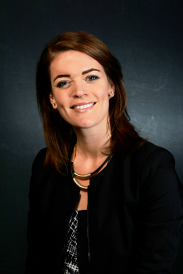 Hayley Kenslea ensures that our technology delivers for clinicians, patients, and systems by coordinating the work of our technical teams and client services.
Our product knowledge expert and workflow engineer for Pathways and Call Center services, Hayley joined MDnetSolutions with almost 10 years of experience in physician practice management, workflow reengineering, and EMR and BI optimization.
Hayley earned a Bachelor of Arts in Psychology & Global Health from Emory University and a Master’s in Healthcare Administration from the Johns Hopkins Bloomberg School of Public Health.
Hayley Kenslea ensures that our technology delivers for clinicians, patients, and systems by coordinating the work of our technical teams and client services.
Our product knowledge expert and workflow engineer for Pathways and Call Center services, Hayley joined MDnetSolutions with almost 10 years of experience in physician practice management, workflow reengineering, and EMR and BI optimization.
Hayley earned a Bachelor of Arts in Psychology & Global Health from Emory University and a Master’s in Healthcare Administration from the Johns Hopkins Bloomberg School of Public Health.
First, let’s discuss some of the specific aspects of care coordination that positively impact patient reported outcomes.
- Deliberately organizing patient care activities – Using proven evidence-based clinical protocols, and layering in the necessary administrative steps through which a patient must be managed – registration, appointment scheduling and attendance, and billing and accounting – enables consistency in care delivery and reduction of waste and delay that is often accompanied by unnecessary variability.
- Sharing information among all participants concerned with a patient’s care – a shared, meaningful and contextual view allows providers to make quick, informed decisions on patient care and communicate all pertinent details to colleagues on the care team, providing an accurate view of patients’ progress in real time.
- Patients’ needs and preferences are known ahead of time and communicated at the right time to the right people – Patients are assessed early and often on a number of different facets, and their response data is used to uniquely tailor their care experience to their needs and manage their risk at the most appropriate level.
- Patient information is used to provide safe, appropriate, and effective care to the patient – Actionable data points are collected, secured, and readily available for monitoring care delivery performance, quality and outcomes performance, and more.
Care Coordination and Return on Investment
As reimbursement models incorporating outcomes measures continue to take hold across all points of care delivery, the demand for dedicated care coordination solutions continues to grow. Whether you are a self-employed clinician or a hospital CFO, it is likely that one of your goals is to measurably improve patient outcomes, without incurring additional undue costs. The published return on investment for care coordination varies wildly, from a net-no-return to, in some cases, over 600 percent. Those models that have shown the most efficacy have emphasized patient and caregiver education, standardization of care protocols, multidisciplinary provider collaboration, and a focus on patient management particularly around care transitions and follow-up. Larger investment has not necessarily been shown to result in better return, but rather a more targeted approach towards a narrower patient population. In Part 2 of this blog series, we will explore this in more detail.Is your care coordination solution and patient outcomes management process saving your team time and money? Contact MDnetSolutions to learn how you can optimize the process through MDMessenger, Pathways, and our concierge services including our NurseLine and Medical Call Center. Or call us at 888.986.3638.
Hayley Kenslea, Director, Product Management
Hayley Kenslea ensures that our technology delivers for clinicians, patients, and systems by coordinating the work of our technical teams and client services.
Our product knowledge expert and workflow engineer for Pathways and Call Center services, Hayley joined MDnetSolutions with almost 10 years of experience in physician practice management, workflow reengineering, and EMR and BI optimization.
Hayley earned a Bachelor of Arts in Psychology & Global Health from Emory University and a Master’s in Healthcare Administration from the Johns Hopkins Bloomberg School of Public Health.

 Mobile Devices Send and Receive Messages
mHealth engages patients through text and multimedia messaging, mobile apps, patient portals, and through interactive devices that track data and instantly communicate results. This improvement in the process allows you, as the care team, to recognize and address complications in real time resulting in a significant reduction in readmission rates and increase in patient success. You can also use real-time communication to analyze and adjust your own practices by noting trends in data and making adjustments to your patients’ coordinated care.
Mobile Access to a Patient Portal Allows the Patient to Act on Your Messaging
Online portals offer secure access to patient information and provide a resource for continuous patient engagement. An online portal enables both the patient and the doctor to know, see, or find vital patient info in one convenient place. Easily housed on your website, both you and your patient can view, store and record information, schedule appointments, refill medications and communicate with ease.
Mobile Devices Send and Receive Messages
mHealth engages patients through text and multimedia messaging, mobile apps, patient portals, and through interactive devices that track data and instantly communicate results. This improvement in the process allows you, as the care team, to recognize and address complications in real time resulting in a significant reduction in readmission rates and increase in patient success. You can also use real-time communication to analyze and adjust your own practices by noting trends in data and making adjustments to your patients’ coordinated care.
Mobile Access to a Patient Portal Allows the Patient to Act on Your Messaging
Online portals offer secure access to patient information and provide a resource for continuous patient engagement. An online portal enables both the patient and the doctor to know, see, or find vital patient info in one convenient place. Easily housed on your website, both you and your patient can view, store and record information, schedule appointments, refill medications and communicate with ease.

 Gopi Yeleswarapu: As Chief Technology Officer, I’m responsible for planning the new product development; hiring software development teams and setting up the product development process; building the cloud infrastructure on Microsoft Azure; and managing budgets and leading software development towards the successful development and release of this product.
 Hayley Kenslea: My role is Director of Product Management, so I work to ensure the end users are happy with the tool. “Happy” means many things – can users understand how to use the tool? Do they know where to find things while logged in? And is the overall look and feel (what we call the User Interface) fresh and inviting?
So exactly what is MDPathways?
H: It’s a tool that helps users — from front-line staff, to clinicians and managers — to better manage patients throughout a care process, ultimately allowing them to understand, anticipate, and react to trends in their programs.
G: From a technical perspective, it is cloud based software as a service (SaaS) platform that integrates with EMRs, PMSs, CRMs and other automation systems in addition to facilitating two-way communications via email, phone calls and text messages to deliver the best possible patient outcomes.
What was the push for creating MDPathways?
G: MDPathways is a brand new upgrade and complete refresh of our proprietary Patient Engagement and Management system, LeadTracker. In this new Avataar, LeadTracker has been transformed from a web based application to a cloud based SaaS platform designed to streamline workflow throughout a practice’s care continuum; help eliminate the risk of data inaccuracies; and engage patients one on one to help providers deliver the best possible outcomes.
What are the top 3 successes of this product?
H: The updated look and feel; the improved reports (no more downloading Charts & Reports on your local desktop); and the speed and more intuitive layout — I could talk about how great MDPathways is for days! Oh, and its integration abilities mean we can feed data directly into or out of MDPathways, which decreases the risk of duplicate data entry and error on behalf of our users.
G: First I’d like to answer this with a quote from Eugene Pototsky, Lead Engineer and Architect who has been instrumental in the design and development of MDPathways SaaS platform development: “The biggest success is the chance to be pioneers of a complex solution within the healthcare industry. This multilateral product required us to develop for all aspects of the care continuum — we needed to create a simple and straight forward user interface (UI) for patients; a functional-rich UI for hospital users; and both of those required the support of a complex, customizable backend platform.” It is truly remarkable.
From my perspective, the biggest successes have been:
Hayley Kenslea: My role is Director of Product Management, so I work to ensure the end users are happy with the tool. “Happy” means many things – can users understand how to use the tool? Do they know where to find things while logged in? And is the overall look and feel (what we call the User Interface) fresh and inviting?
So exactly what is MDPathways?
H: It’s a tool that helps users — from front-line staff, to clinicians and managers — to better manage patients throughout a care process, ultimately allowing them to understand, anticipate, and react to trends in their programs.
G: From a technical perspective, it is cloud based software as a service (SaaS) platform that integrates with EMRs, PMSs, CRMs and other automation systems in addition to facilitating two-way communications via email, phone calls and text messages to deliver the best possible patient outcomes.
What was the push for creating MDPathways?
G: MDPathways is a brand new upgrade and complete refresh of our proprietary Patient Engagement and Management system, LeadTracker. In this new Avataar, LeadTracker has been transformed from a web based application to a cloud based SaaS platform designed to streamline workflow throughout a practice’s care continuum; help eliminate the risk of data inaccuracies; and engage patients one on one to help providers deliver the best possible outcomes.
What are the top 3 successes of this product?
H: The updated look and feel; the improved reports (no more downloading Charts & Reports on your local desktop); and the speed and more intuitive layout — I could talk about how great MDPathways is for days! Oh, and its integration abilities mean we can feed data directly into or out of MDPathways, which decreases the risk of duplicate data entry and error on behalf of our users.
G: First I’d like to answer this with a quote from Eugene Pototsky, Lead Engineer and Architect who has been instrumental in the design and development of MDPathways SaaS platform development: “The biggest success is the chance to be pioneers of a complex solution within the healthcare industry. This multilateral product required us to develop for all aspects of the care continuum — we needed to create a simple and straight forward user interface (UI) for patients; a functional-rich UI for hospital users; and both of those required the support of a complex, customizable backend platform.” It is truly remarkable.
From my perspective, the biggest successes have been:


 However, unlike simply pushing a couple of keys on the screen embedded in the dashboard of your car, the transition from paper to digital when it comes to electronic medical records (EMR) has been anything but smooth. The government-led transformation of healthcare information has become a taxing process for the healthcare industry.
According to the U.S. Department of Health and Human Services, office-based physicians using an EMR increased from 48 percent in 2009 to 78 percent last year. However, some medical practices are still using the old paper format.
One of the major solutions to increasing patient engagement is an EMR system. Doctors are aware of this and most are eager to go digital. The goal of an EMR system is to make the process of patient recordkeeping easier, more accurate, more comprehensive and more efficient. It helps enhance patient care and improve patient outcomes.
However, many doctors are not happy with their current system.
In an article appearing on
However, unlike simply pushing a couple of keys on the screen embedded in the dashboard of your car, the transition from paper to digital when it comes to electronic medical records (EMR) has been anything but smooth. The government-led transformation of healthcare information has become a taxing process for the healthcare industry.
According to the U.S. Department of Health and Human Services, office-based physicians using an EMR increased from 48 percent in 2009 to 78 percent last year. However, some medical practices are still using the old paper format.
One of the major solutions to increasing patient engagement is an EMR system. Doctors are aware of this and most are eager to go digital. The goal of an EMR system is to make the process of patient recordkeeping easier, more accurate, more comprehensive and more efficient. It helps enhance patient care and improve patient outcomes.
However, many doctors are not happy with their current system.
In an article appearing on 
 As a seamless extension to your practice, our orthopedic call center provides the timely and compassionate assistance your patients need. We handle scheduling appointments right into your current scheduling book and we perform appointment reminders and rescheduling. Because our trained staff is here to serve, your patients speak to a live enthusiastic voice, eliminating the need to leave a message after hours or during high-volume call times.
Not only do we provide your patients with top-notch scheduling services, MDnetSolutions also offers you a 24/7 NurseLine, providing access to a nurse triage servic, providing access to a nurse triage service staffed by professional RNs. Your patients are engaged around the clock, as our professionally-trained, HIPAA-compliant staff handles each call with dedication and compassion.
As a seamless extension to your practice, our orthopedic call center provides the timely and compassionate assistance your patients need. We handle scheduling appointments right into your current scheduling book and we perform appointment reminders and rescheduling. Because our trained staff is here to serve, your patients speak to a live enthusiastic voice, eliminating the need to leave a message after hours or during high-volume call times.
Not only do we provide your patients with top-notch scheduling services, MDnetSolutions also offers you a 24/7 NurseLine, providing access to a nurse triage servic, providing access to a nurse triage service staffed by professional RNs. Your patients are engaged around the clock, as our professionally-trained, HIPAA-compliant staff handles each call with dedication and compassion.

