long-term engagement

Driving Long-term Engagement is Key to Increasing Bariatric Surgery Volume

What if there was a cure for diabetes but only 1% of the patient population even knew about it? And what if out of the people who were aware of it and sought more information from healthcare providers, only 15% ended up receiving it? That would no doubt be considered a national healthcare crisis. Stakeholders like advocacy groups, insurers and the Centers for Disease Control would want to know why patients were not receiving lifesaving therapy. Identifying and eliminating hurdles to receiving that care would quickly become a top priority for clinicians and healthcare systems.

The Struggle to Convert Bariatric Surgery Candidates

A feeling not dissimilar to this was present at the Texas Association for Bariatric Surgery’s 2017 Annual Meeting in Dallas last week. Bariatric surgery providers repeatedly expressed frustration at their astonishingly low conversion rate: only 15%. That means that 85% of the patients that express an interest in the surgical therapies that can help them control obesity and comorbidities like high blood pressure, diabetes, and severe sleep apnea, never end up receiving surgery. There are even more patients that aren’t measured because they don’t initiate information seeking. Let’s start with the patients that ask about the surgery but fall out of the funnel before converting. It’s understandable when you consider how lengthy the path to surgery can be. The average amount of time that passes between first considering surgery to undergoing it is three years. Those are also not idle years where patients are simply waiting for a date to open up; the path to bariatric surgery is complex and riddled with insurance pre-approvals, medical and psychological evaluations, and lifestyle changes that patients must commit to. Failure in any of these areas results in patients not receiving the surgery that can greatly improve their overall health. Read more : Bariatric Surgery Seminars: Online vs. In-Person 

How Insurance and Accreditation Impact Patient Access

In addition, most hospitals in Texas are within miles of each other, competing for the same patient. I spoke with hospital administrators with bariatric programs that, although accredited by MBSAQIP, did not meet certain standards for insurance carriers, like BCBS Blue Distinction or Aetna IOQ. In one particular case, I learned that the hospital I was speaking with had to refer out 30%, or 35 of their bariatric cases to a competing hospital because the patients were members of an insurance plan that required the insurance’s ‘seal of approval,’ and you can bet that the competing hospital was accredited by the insurance provider. Of course there will be patients who start the process, only to realize they either can’t afford surgery or don’t qualify for surgery. But the number is far fewer than most coordinators realize, and they would know that if they tracked all of their leads. Also, there are alternative ways to keep these patients engaged, motivated, and help them achieve their desired goals, like offering a weight loss medicine program, non-invasive balloon procedures, or by offering discounted procedures with financing options for cash pay patients. Read more: A Guide to How to Verify Insurance Eligibility & Benefits

The Challenge of Managing the Patient Journey

Bariatric surgery coordinators are responsible for helping move patients through the process, but they are largely operating with hands tied behind their backs. Most of them are using simple Excel spreadsheets to keep up with patient progress. They know that this is inadequate for driving engagement and leading patients through a journey full of milestones, education, and paperwork. I heard the frustration again and again throughout the conference. This is one of the holes in healthcare (and frankly, EMRs) that led us to develop Sequence and a major reason we exhibited at the TABS meeting. Tracking patient engagement and measuring outcomes through a care episode is becoming a top concern for many healthcare providers as payers move to value-based reimbursement programs — but for bariatric surgeons, moving patients through an exceptionally long and complicated funnel is key to ensuring that they receive treatment in the first place.

Turning Awareness Into Engagement

What about the potential patients who never make it to the information seeking stage? The same principles that start with intent and successfully guide patients through the care journey from pre-op all the way through recovery can also be used in initial marketing. It’s a matter of supplying the best education at the right time, which is almost impossible to do with spreadsheets alone. Moving patients from “I’ve heard of bariatric surgery,” to “It sounds like it might be right for me,” is a marketing journey that is driven by the same methodologies that move patients from intent to conversion: well-timed education, engagement, and follow-up with outcomes that can be measured and quantified at every touchpoint. Done correctly with the right technology solution, managing the journey from awareness to intent effectively boosts conversion rates and shortens that three year timeline to receiving surgery.

Improving Outcomes With Better Patient Management

Bariatric surgery is moving quickly, with new procedures evolving and better long-term success rates. Providers are quite aware that one of the simplest ways to improve outcomes and increase the volume of surgeries they perform is to more effectively manage patients and guide them through the entire funnel.
As Guideway Care Regional Sales Director, Nathan McCormack ensures that new clients are paired with patient management and healthcare marketing solutions that support their objectives. Please contact us to learn more about how Guideway Care can partner with you to give you the power to dramatically boost patient engagement and measure outcomes today.
Easy Ways to Support American Heart Month | Guideway Care - Sequence of Activation

Easy Ways Your Bariatric Surgery Center Can Support American Heart Month in February 2017

Although we provide patient management solutions for all types of hospitals and clinics, a significant percentage of partners are bariatric surgery centers. With February being American Heart Month, we thought it would be best to position our tips for supporting American Heart Month in the context of bariatric surgery center marketing and patient management—however, they can easily be used by general healthcare providers and many other specialties or centers of excellence. [tweet “…tips for supporting American Heart Month in the context of bariatric surgery center marketing…”]

Linking Bariatric Surgery, Diabetes and American Heart Month

It is not hard to connect the dots between bariatric surgery, diabetes and promoting heart health in conjunction with American Heart Month. But don’t just take our word for it! For instance, the American Heart Association last year published a release, Bariatric Surgery May Reduce Heart Failure Risk, in which it found bariatric surgery “can significantly reduce the risk of heart failure in obese patients.” It further explained that the “reduced risk of heart failure may be due to bariatric surgery’s effects on other risk factors of heart failure, including diabetes, hypertension and atrial fibrillation.” The American Diabetes Association is quite aligned with the American Heart Association’s position. According to its Living With Diabetes Web guide for related complications, “people with diabetes have a higher-than-average risk of having a heart attack or stroke. Additionally, it said “there’s a big link between diabetes, heart disease, and stroke. In fact, two out of three people with diabetes die from heart disease or stroke, also called cardiovascular disease.”

Promote Your Bariatric Surgery Center’s Heart Health Programs

Your bariatric surgery center likely already has programs, online content and print collateral that advocate lifestyle improvements that can directly or indirectly improve heart health. For example, the National Health Information Center’s American Heart Month Toolkit offers several suggestions, including:

• Quitting smoking and avoiding secondhand smoke

• Controlling cholesterol and blood pressure

• Drink alcohol only in moderation

• Better weight management

Create a Branded Blood Pressure Wallet Card (and Other Great CDC Ideas)

Speaking of print collateral, the Centers for Disease Control’s Strong Men Put Their Hearts First page provides a wealth of ideas and resources for supporting American Heart Month. One of their standout resources invites guests to print and distribute a CDC-branded blood pressure wallet card for tracking blood pressure. This is a superb concept for bariatric surgery center marketing teams to create their own branded versions—and to perhaps improve upon with input from your bariatric surgeons and nurses! Bonus tip: Do a small-batch print run that mentions American Heart Month and give these out in February and then do another run for the rest of the year. Any extra American Heart Month versions can be saved for next year!

Go Red for Women!

Go Red for Women is the American Heart Association’s national movement to end heart disease and stroke in women. Its Get Involved page shares multiple ways that your bariatric surgery center and its patients can show support, including an opportunity to join a heart disease research study.

Use Social Media for #AmericanHeartMonth Awareness

Along with using social media to share and find useful information related to American Heart Month (including trending hashtags such as #cervicalhealthmonth and #goredforwomen), it’s also an excellent opportunity to expand your networks. For instance, if you don’t already, here are some worthy Twitter accounts you might want to follow:

• @American_Heart, the official Twitter page for the American Heart Association

• @GoRedForWomen, the official Twitter page for Go Red For Women

• @MillionHeartsUS, the official Twitter page for Million Hearts, a national initiative to prevent one million heart attacks & strokes

Not sure what to write in your Tweets? Healthfinder.gov has created a list of American Heart Month sample tweets that can get you in the right direction!
Guideway Care proudly supports American Heart Month. For more about our company and our patient management platform Sequence, please contact us.
cervical awareness

Five Easy Ways Your Women’s Health or Cancer Treatment Center Can Support Cervical Health Awareness Month in January 2017

Now that the winter holidays are over, it’s time to get back into the swing of things with marketing and promoting your healthcare facility. This is particularly true if you hospital or clinic offers women’s health services or has a cancer treatment centers, because January is national Cervical Health Awareness Month. The National Cervical Cancer Coalition estimates that approximately 13,000 women in the United States are diagnosed with cervical cancer each year. However, because cervical cancer is preventable—especially in conjunction with cervical cancer screenings—the American Cancer Society reports that the cervical cancer death rate has declined by more than 50 percent in the past 30 years. Additionally, the American Cancer Society relates the decline to greater numbers of human papilloma virus (HPV) vaccines given to children, which is linked to most cases of cervical cancer. Your women’s health or cancer treatment center likely already has strategies for creating awareness about cervical health and encouraging cervical cancer screenings. However, with January being national Cervical Health Awareness Month, there are some excellent tips and resources available that can help you continue those objectives and support this important cause. Here are five to stimulate some of your own ideas!

Update Your Website with Calls to Action for Cervical Cancer Screenings

Creating banners and other call to action graphics that encourage cervical cancer screenings at your facility is perhaps the first and most important step to take, especially if you position them to include Cervical Health Awareness Month messaging. Likewise, if you have patient management software that enables you to port Website visitors directly to your appointment setting page, your call-to-action graphics can make it even easier for them to find and schedule a cervical health screening.

Create Content to Promote Cervical Health Awareness and Cervical Cancer Prevention

If you have the resources, consider generating other types of online and print content, such as infographics that quickly explain what cervical cancer and HPV are and how they can be prevented and treated. Another suggestion would be to collect testimonials—especially video testimonials—from people that were able to use your cervical screenings for early detection and your cancer treatment center.

Include Cervical Health Awareness in Your Newsletters and e-Mail Campaigns

One of the most difficult aspects of producing a monthly newsletter or other type of regularly published e-mail campaign is finding subjects that will be of interest to your recipients. Events such as Cervical Health Awareness Month are ideal in this situation because you can offer short, simple messages if space is tight…or you can provide more expanded information if you have space to fill.

Use Social Media for #CervicalHealthMonth Awareness

Along with using social media to share and find useful information related to Cervical Health Awareness month (including trending hashtags such as #cervicalhealthmonth, it’s also an excellent opportunity to expand your networks. For instance, if you don’t already, here are some worthy Twitter accounts you might want to follow:

• @infoASHA, which is heading a Thunderclap to end cervical cancer

• @StopHPVcancer, which is the National Cervical Cancer Coalition’s Twitter

• @_cervicalcancer, which is the account for CC Awareness, a cervical cancer awareness organization

Visit the National Cervical Cancer Association’s Website for Content and Ideas

The NCCC’s Cervical Cancer Awareness Month page provides even more ideas and several outstanding print and online resources, including:

• Free fact sheet download, Ten Things to Know About HPV

• Free eBook, HPV & Cervical Cancer: Stories from Survivors and Supporters

• Cervical Cancer Awareness Month posters

Likewise, the American Cancer Association also has a Cervical Health Awareness Month page that shares an equally superb collection of resources.

Guideway Care proudly supports Cervical Health Awareness Month. For more about our company and our patient management software solution, Sequence, please contact us.

Your Hospital Website Secure Enough for Google in 2017?

Is Your Hospital Website Secure Enough for Google in 2017?

With 2017 only a few days away, there will soon be a very clear distinction between all hospital Websites: those that have TLS/SSL encryption security and those that don’t. This distinction is not just a matter of whether or not your hospital Website uses TLS/SSL because of its implied security benefits, but it may soon have influence on your SEO rankings and how confidently Google’s Chrome browser presents your Website to visitors. “But, wait, how do I know if my hospital Website—or any Website—is secure?” you might be asking yourself right now. It’s simple:

• Open your Chrome browser

• Type in your hospital Website address

• Let the page load

• Look for the icon that appears in the address bar to the left of the URL

Do you see a green lock icon in the address bar? If yes, and if the Website is yours, congrats, your hospital Website is secure! Do you not see it? Well, as you can guess, your Website is not secure. Another way to check is to look at the complete Website address (URL) after it loads. Do you see a “https://”? If so, it should be secure (but this is not a hard and fast rule, as it depends on whether or not the security certificate is valid). Otherwise, if you only see the more common “http://”, then you can be certain that it not secure. In this context, you are likely in one of two very distinct camps of hospital Website administrators and online healthcare marketers: those that understand what any of this means (and what to do about it) and those that don’t. If you are in the latter camp, you’ll want to read this. But even if you are in the former and haven’t yet made a decision or taken action, you might also want to read on!

Google Chrome to ‘Shame’ Unsecured Websites in 2017

Although Google first announced that it would start giving more SEO juice to secured Websites in 2014, it was uncertain about how much impact this new Google ranking signal would actually have. As virtually anybody that is responsible for their hospital Website SEO knows, there is never any one specific ranking signal that makes or breaks your Page rank, SERP positions, etc.. Rather, it’s a combination of factors and often some unknown algorithm change that you don’t discover until well after the fact! Although still very much up for debate, SEO analysts indicate that the TLS/SSL impacts on ranking are typical in that although it might not hurt you if you don’t integrate it into your hospital Website SEO strategy, there is evidence that it can help you if you do. However, on January 1, 2017, Google will enact a very explicit change that could make a direct impact: It will begin “shaming” Websites that don’t have TLS/SSL certificates by adding a “NOT SECURE” notice to where you’d normally just see the small icon that indicates security status. This will initially only affect Websites that collect passwords or credit card information, but will eventually affect all “http://” Websites. At any Website, visitors are more likely to turn away or not return if they feel that their online security is at risk. Obviously, that not only hurts the SEO, but also the overall ability of the Website to fulfill its goals and objectives. But for hospital Website visitors, that sentiment is likely to be even stronger, no matter if they are just casually browsing to compare you to another hospital they are evaluating or if they are intending to make an appointment or share other personal information.

Securing Your Hospital Website: What are TLS/SSL and Certificates?

Naturally, you want to do everything you can to make your hospital Website visitors feel secure in their online experiences and to relate them positively of your brand. Fortunately, making your hospital Website secure enough for Google Chrome in 2017 is not too difficult to achieve. Without getting into a lengthy examination of how the Internet bridges a visitor to a Website or what the “TLS” or “SSL” acronyms mean or how “TLS/SSL certificates” work, the simplest explanation is your hospital Website visitors’ connections are either encrypted (secure) or they are not. If they are encrypted, it means that nobody can see the data that is passing between them and your Website. “TLS/SSL” is the technology that enables a secure connection; a “TLS/SSL certificate” is what actually binds the visitor and the Website securely.

But What About Mixed SSL Content?

“Mixed SSL content” means that you have some pages with TLS/SSL security and others without. If your hospital Website has mixed SSL content, you’ll need to update it so that the entire Website is secure. Otherwise, you can expect to get the unwelcome “NOT SECURE” label.

How to Convert Your Hospital Website to TLS/SSL

If you are now convinced that converting your hospital Website to TLS/SSL encryption is a best practice that you want to adopt, doing so can be a relatively simple process:

1. Request that the company hosting your site provide you with a Certificate Signing Request (CSR).

2. Visit your domain provider (e.g., GoDaddy) and purchase an SSL for three years or more.

3. Upload the CSR when prompted.

4. Download the SSL certificate, and send it back Web hosting provider.

At some point during this process, you may be asked about what type of SSL certificate to generate. You will likely be given with three options, each with increasing benefits:

• Domain Validated (DV) Certificate: Verifies your ownership of the domain

• Organization Validated (OV) Certificate: Proves that you own the domain and that your organization is legitimate (verification process that you are a legitimate business)

• Extended Validated (EV) SSL: Offers the highest level of assurance to your customers (applicants must pass an extensive vetting process)

When choosing a certificate, be sure to find out if it covers one domain or multiple sub-domains. Once you acquire and install your TLS/SSL, you will now be able to provide a much more secure experience for your visitors and avoid any negative SEO or Chrome impacts.
As Guideway Care Associate Director of Search Engine Marketing, Susan Gullion is one of our most knowledgeable resources for enhancing our healthcare clients’ search engine marketing strategies with SEO, PPC and social media. If you already host your hospital Website with Guideway Care, we can guide you through the process of selecting the best SSL certificate. For more information about hosting and other healthcare Website services, please contact us.
Did you miss any of Google’s My Business listing changes and updates in 2016? Here’s a recap you should tackle before the year ends.

Top 2016 Google My Business Listing Changes for Online Healthcare Marketers

If you are responsible for your hospital, clinic or other healthcare facility’s online marketing or patient acquisition, you are likely trying to tick off those lagging to-do’s from 2016 as you prepare for the upcoming new year. And just as likely, getting your Google My Business listings up to spec is on that list. Although usually in the “low-hanging fruit” category of easy but often overlooked tasks for online healthcare marketers, updating your Google My Business page (or pages) is a job that’s never done because there are often frequent changes and updates to what you can and cannot do. Here is a list of key changes and new features from 2016 that will help you prioritize your workflow in these final weeks of 2016 and develop your strategies for 2017.

Google My Business Description Can Only be Edited in Google+ (August 2016)

When patients and customers search online for local hospitals, doctors and clinics, they often rely upon the results from regular Google searches and Google Maps, which includes your:

• Address

• Contact Info

• Hours (including holiday hours!)

• Introduction (description)

• Photos

Up until August 2016, you used to be able to manage introductions in your Google My Business administration panel, but now it may only be done in Google+. So, if you haven’t updated them in a while—or have tried to but found that you were unable to in the My Business admin panel—be prepared to do it a little different than you have in the past. Get help: Visit Google’s “Edit your business listing on Google” page

Manage Multiple Google Listings Via Bulk Upload Spreadsheets (February 2016)

Although a relatively simple procedure, updating your healthcare facility’s Google listing can be tedious if you are managing multiple listings. This is particularly true for online healthcare marketers that manage hospitals with large campuses and have listings for specific departments or even multiple campuses. Likewise, the same applies if you are managing listings for multiple doctors or clinics. However, in February, Google simplified the process by allowing you to make changes with a bulk upload spreadsheet. Then in April, they rolled out a new easy-to-use process for enabling all of your listings for download. They continued to improve the process through the year by enabling bulk updates for:

• Logo, profile and cover images (March 2016)

• Spreadsheet change reviews (July 2016)

• Editing attributes (e.g., “has Wi-Fi”) (December 2016)

So, rather than having to go the the admin panel for each listing, finding the field that you want to change, and then having to enter updated information, you can now do it all from the convenience of a single spreadsheet that also lets you verify all information for all listings at a single glance! Get help: Visit Google’s “Manage Google updates” page, “Create your bulk upload spreadsheet” page and “Enable listings for download” page

Manage Google Updates Automatically (August 2016)

The importance of this feature is that it helps resolve a problem that many online healthcare marketers might not know even exists! The problem: Google can change or unpublish your listing if it discovers incorrect information in it from third-party sources or direct users. In such instances, your “Google Updates” status will indicate:

• If new data was added

• If data was removed

• If data was replaced

The solution: First, you’ll need to detect the change, which requires you to regularly monitor your listings. Second, after you’ve detected a change, you can manage the updates in bulk, using the aforementioned spreadsheet download/upload process.

Insights Now Available for Photos (December 2016)

Using analytical tools such as Google’s Insights is essential to any online healthcare marketing strategy because it enables you to not only learn how visitors found your healthcare facility’s listing and Website, but perhaps as importantly, what they do after they arrive at them. Content is ultimately what is attracting and retaining those visitors, which too often is narrowly considered in terms of the text on a Web page. However, a solid healthcare content marketing strategy should also include analysis—insights—for other crucial engagement metrics, such as:

• Driving directions requests

• Phone calls from the listing (e.g., how many, what times)

As of this month, you can now capture and analyze performance metrics for your listings images—which means that if your listing doesn’t have any photos, getting some uploaded and making that part of your ongoing content strategy should become a priority. Get help: Visit Google’s “View Insights from your business listing” page

Improved Local Search Ranking Guidance (March 2016)

Last but not least, in March, Google announced its  “Improve your local ranking on Google” guidance. Although neither a new change nor a new feature, it is no less important, as it is a very simple yet powerful document that explains: • What information is needed to maximize how often your healthcare facility’s local listing is found • How Google determines local rankings
As Guideway Care Associate Director of Search Engine Marketing, Susan Gullion is one of our most knowledgeable resources for enhancing our healthcare clients’ search engine marketing strategies with SEO, PPC and social media. Guideway Care patient acquisition solutions can make your healthcare facility’s patient acquisitions smarter every step of way. Contact us today to learn more about Sequence, our innovative patient engagement platform.
cupcakes

Four Keys to Successfully Rebranding Your Healthcare Marketing Efforts

“It’s a good thing to be forced to be innovative,” Avice Meehan, Senior Vice President, Chief Communications Officer, Memorial Sloan Kettering Cancer Center. Innovation in the way outcomes are achieved and measured within the healthcare industry is forcing companies to rethink how they approach healthcare marketing efforts. As healthcare companies are looking for a way to fill gaps in their existing technology, the MDnetSolutions leadership team realized we had a competitive advantage in the race to provide relationship and workflow management technology to care teams looking to improve and document quality care. After two years of intensive product development, market research, and internal upgrades, we have a new identity and a new message to share. sqnchlth_launch-removeoldlogo
MDnetSolutions is now Guideway Care. See our brand come to life as we walk through the four keys to a successful rebrand.
  1. Embrace your past, know your place in the market and define the cornerstone of your foundation.
With 12 years’ experience supporting patient engagement, lead tracking, and patient care compliance for bariatric health providers, we already had the foundation to answer the urgent demands for patient management technology. LeadTracker, our flagship patient management software, along with our digital marketing, Medical Call Center, and NurseLine support services, allowed providers to grow their business and track a patient’s journey through the steps of care. Our vision was always to enhance the patient and provider relationship. The new challenge: to take this vision beyond the bariatric service line.
  1. Understand why there is a need for change and define your new value proposition.
The Need for Change: Healthcare companies, from the enterprise level to private practices, and the service providers catering to them, have been affected by shifts in the healthcare industry. Greater transparency in communication and care delivery is a result of the new demand for accountability for both the provider and the patient who has an increasingly important decision-making role in their quality of care. As technology continues to evolve and care teams are connected by interoperable systems there is a high demand for solutions that connect the data points and capabilities of expansive platforms currently in place. Electronic medical record (EMR) systems gather data, but often lack the context and capability to promote real-time updates to the patient’s steps of care. Our Solution: That is where the original concept behind LeadTracker came into play for MDnetSolutions. The dashboard gave care team members a high-level view of their patient population as well as individual views of each patient’s progress through a care pathway. This platform, along with the MDMessenger feature capable of sending and receiving automated engagements, successfully enhanced efficiency and compliance throughout the steps of care. The value proposition was in high demand in service lines beyond MDnetSolutions’ bariatric clients. Although LeadTracker couldn’t meet the growing demands across the healthcare industry, a more robust platform would offer the same value proposition, allowing clients to enhance the technology they already use, maximizing the return on their IT investments.
  1. Invest in your people and your solutions, realizing your full potential.
Two years of intensive product development, including the acquisition of Care Transition Systems IVR survey delivery service, and the expansion of MDnetSolutions internal talent team, allowed the company to grow to meet demand. The right people, with the right talent and unbridled passion for exceeding expectations came together to create an end-to-end solution. The new Pathways platform and messaging capabilities, along with a la carte support services including the NurseLine, Medical Call Center and agency-style Digital Marketing and Creative departments, gave the team a way to test the market and fine tune the capability to exceed demands. What did our market research reveal? Our new platform and growing support services no longer looked like the MDnetSolutions our clients and partners knew. We were better. We evolved. Through a sequence of deliberate events, we rose to meet the demands of healthcare providers outside of our original scope, providing smart solutions to service lines including orthopedic and cardio.
  1. Share your new message, identifying the value of your history and the vision of your new brand. sqnchlth_launch-Evelyn
We are Guideway Care, and we are smarter every step of the way. Guideway Care now offers a streamlined end-to-end patient engagement and care coordination solution that can stand alone or work in tandem to support existing technology. We provide best-in-class support services to enhance our IT solutions, allowing our clients to thrive at the crossroads of innovation and intervention. We are truly smarter every step of the way. More importantly, our new vision is to ensure that our clients are equipped with patient engagement and care coordination tools to promote healthy outcomes that are also smarter every step of the way.
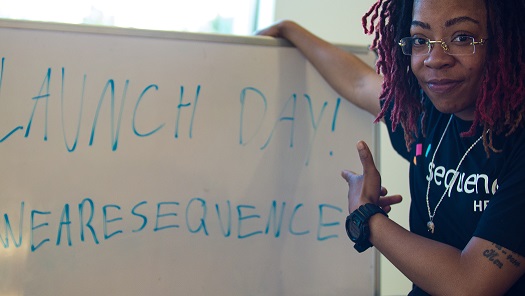
For more insight into industry trends and how Guideway Care is addressing the demands for innovations across the healthcare industry, call today. 888.986.3638 Sign up for our Live Webinar to participate in a demo of the Sequence platform and learn more about smart patient engagement solutions from Guideway Care. Follow us on social media by using the hashtag #WeAreSequence and tell us how you are making the patient experience #SmarterEveryStepoftheWay.
Content Strategy: How it Works and Why You Need It

Content Strategy: How it Works and Why You Need It

Want Content that Converts? Forget the 5 Ws of Writing – Content Strategy is How it Works

Everyone knows the bare bones of a good story. Whether it’s a joke for the break room, background for a business plan, or just a quick social update, the “who, what, why, when, where” is vital to sharing a story that has the potential to compel your audience. Creating that potential is where content strategy comes in — and that’s also where much of the content out there falls short. @meghscase, author and contributor for the Content Marketing Institute, summed it up best saying,
“Content strategy is about providing the right content, to the right people, at the right times – for the right reasons.”
So what does that mean for marketers? Simply talking about your topic (or product, or cause, or service) does not grab your readers’ interest. But using those story staples to cue your readers into taking the next step does. Let’s assume your content isn’t working and you want to know why. You’ve invested time and money into analyzing the best-performing keywords, hired someone to write with them, designed a beautiful site where the copy can live, and yet the conversions just aren’t there. Read More: Healthcare Content Marketing Strategy

So what’s the issue?

If you haven’t given your audience the proper cues to pull them into the conversion path, they simply do not know how to buy in. Shoving a call to action button above the fold doesn’t solve it either. Finding that balance between what-it-is and get-it-now can be uncertain, but it doesn’t have to be complicated if you follow this stair-step logic:

Step 1: Decide what you really want the reader to do (the right content)

Whether that’s sign up now, get more info, donate today, or buy our product, knowing the single result you want to achieve will help you decide how much up-front info your reader needs and what the tone should be.

Step 2: Identify your real audience (to the right people)

It may not be who you assume. Do the research and see who comes to your site, who stays, and who converts. If you’re seeing a difference between who you thought you were talking to and who actually buys in, try some A/B testing to whittle down to the content that converts.

Step 3: Think about how much info your reader needs to buy in (at the right time)

This is the challenge. It’s tempting to pop a text link or an action button in the first paragraph but if your reader doesn’t yet know what they’re interested in, much less why they need it, then you’re wasting good space. Don’t stress; simply re-read your content — if it sounds like a used car sales pitch, take out the first two actions and revise.

Step 4: Understand why you’re writing (for the right reasons)

The mad dash to create unique content and stay ahead in the search results has, unfortunately, resulted in content that just isn’t relevant. Use the prior three steps as a lens to help determine the purpose of what you’re writing and how it will help your business. If it doesn’t, don’t bother — spend those marketing dollars somewhere that will help give you the best results. (A follow-up CRM campaign to those who’ve already converted, alternative advertising to those like your current customers, and boosts for existing content that works are just three options to consider.) The bottom line is that you know way more about your product that your readers ever will. Give them content cues that make them feel informed, empowered, and enabled. In return, you will get more conversions and click throughs.

4 Healthcare Hashtags & How to Use Them

In today’s “always-on” society that values information more than ever, it’s no wonder we’re taking our health questions online, too. So how can we marketers use this outlet to increase patient engagement and help practices connect more with their patients? Start with these four hashtags:

#mHealth

Typically, this tag refers to the use of mobile technology such as apps, smartphones, tablets, and the Cloud to improve access to, and reduce the cost of, healthcare. #mHealth solutions can be as basic as scheduled text message reminders to take medications; as sophisticated as a cloud-based integration of clinical workflow and care coordination; with limitless possibilities in between. Join the conversation by sharing case studies, articles, and even the innovations created by MDNetSolutions, such as LeadTracker and MD Messenger.

#digitalhealth

Also known as digital healthcare, conversations that include this tag discuss the usage of hardware and software solutions that enable information and communication technologies to address health issues. Although similar to #mHealth, it is much more inclusive of public health measures like wellness education, as well as UX innovations for data capture and management. Use this tag to amplify news stories about the new generation of healthcare as well as our work with patient engagement and management, and outcomes management.

#patientengagement

This broader topic tag combines the tools and motivation necessary to activate a patient’s decision-making process with milestones designed to encourage positive patient behavior, including obtaining preventive care or exercising regularly. It also incorporates the technologies used to connect with, and monitor the progress of, new and existing patients. This tag is a great opportunity to share our work with patient portals, HRAs, electronic forms, and online education; as well as website design and development, video production and mobile experience optimization.

#telehealth

Best summed up as “See a doctor anytime, anywhere!”, this initiative enables patients to receive convenient care for minor illnesses and ailments from in-network doctors by phone or online video conference. This tag also incorporates topics around the convenience and scaleability of solutions that unify electronic delivery of EMRs and medical device monitoring. Some MDNet services that are relevant to the #telehealth conversation include our NurseLine, Medical Call Center , and Virtual Consultations.

Bonus tag: #wearables

Interestingly, this trending lifestyle topic is causing a buzz in the healthcare industry as well. “Wearables” are defined as any small sensory device that is worn throughout the day to measure and monitor a set of vitals. FitBit, the Apple Watch, and even Google Glass are just a few examples of the new wearable technology being examined for its ability to empower patients, particularly when it comes to proactive health management like exercise and better eating habits. But the uses don’t stop there — some app-enabled wearables are hoping to extend their software to include tracking for reproductive health and diabetes management, while others already track sleep cycles and stress-related stats — resulting in tweets that resound with question: Can the internet of things help fuel a #healthcare #revolution? Be sure to follow us on Twitter at @mdnetsolutions and keep the conversations going! Contact Guideway Care for expert healthcare advertising guidance and strategy. Use social media to reach more patients and achieve your marketing goals.
Social media communication concept

Facebook’s Changing the Face of Healthcare

On Feb. 4, 2004, Mark Zuckerberg and his college roommates invented an online social networking service designed for people to post photos, add friends and just hang out online. Fast forward to nearly 11 years later and Zuckerberg’s little project has ballooned to a multi-billion dollar company boasting more than 1.2 billion members around the world.Social media communication concept Not only has Facebook and its other popular social media networks, Twitter, Instagram, YouTube, Google+, Pintrest, LinkedIn and many more, transformed the way we stay in contact with friends and family, social media has changed the way we obtain information. When news occurs, chances are you will learn about it because of social media. Perhaps a Facebook post or getting a tweet from someone you follow on Twitter or a photo on Instagram from the event. Social media has not only transformed the way we get information, but the way we share, this includes sensitive subjects such as healthcare. The majority of hospitals and healthcare providers nationally are cold to the idea of using social media, but the truth is patients are using the various social media avenues, and those choosing not to participate are losing out on engaging and recruiting a plethora of potential patients. The Numbers Don’t Lie Gen Xers and Millennials were the first to grow up with computers in their homes. Millennials, those born between 1982 and 2000, also are more technically savvy than any generation.  A recent poll found 97 percent of college students owned a computer and 94 percent owned a cell phone.  Information is just a click or tap away. The 18-24 age bracket is also twice as likely to use social media for health-related topics. According to Mediabistro, more than 40 percent of consumers say information found on social media affects the way they treat their health condition. Considering more than a quarter of all conversations on Facebook is health related, your practice can ill afford to not have a social media presence. Your practice could lose the attention of an entire generation if you do not have an online presence. Health care professionals have an obligation to create educational content to be shared across social media. They can inform consumers about health related issues, stop misleading information and actively engage consumers and convert them into patients. Older generations also are becoming tech savvy. They are searching the Internet when they or a loved one is sick or develop a medical condition. According to the Pew Research Group, 61 percent of U.S. adults own a smartphone or iPhone. Of that 61 percent, nearly 20 percent has at least one health-related app. This drives home the fact you must have an online presence and your information should be accessible for patients on the go. Technology has changed the way you practice medicine. Now technology should change the way you communicate and engage your patients. You need to have a strong mobile focus no matter the size of your practice. Guideway Care can help. You are the medical expert, so let us market your practice by building an eye-catching, responsive website. A responsive website looks the same regardless of whether it is being viewed on a desktop, laptop, tablet or smartphone, thus enhancing the user experience. We also can craft a social media campaign designed to inform, entertain and engage your patient population and build your patient roster. Do you still think Facebook is just for sharing vacation photos? In a survey conducted by the DC Interactive Group, 41 percent of people say social media would affect their choice of a specific doctor. The message is starting to get to your peers. Twenty-six percent of hospitals participate in social media, and 60 percent of doctors say social media improves the quality of care delivered to patients. Since 33 percent of patients use social media for health-related matters, including seeking medical information, tracking and sharing symptoms and broadcasting how they feel about doctors, drugs, treatment, medical devices and health plans, can your practice afford to stick with your current online marketing approach? Call Guideway Care today and enhance your online patient engagement strategy.
Do You Hear What Your Patients are Saying?

Do You Hear What Your Patients are Saying?

Consumer Reports surveyed 1,000 Americans regarding the typical complaints they have about their doctors and the No. 1 grievance was “unclear explanation of problem.” That is a rather sobering thought. Many would guess the most popular complaints were waiting time or inconvenient office hours. Those complaints were on the list; however, those pale in comparison to the lack of communication between patient and physician. Each person surveyed was offered a list of common complaints and asked to rate the intensity of the complaint on a scale of one to 10. One meant the patient was not bothered at all and 10 meant most intense.iStock_000014616885_Medium Unclear explanation from the physician garnered the top spot with an average score of 8.3. Rounding out the top five most common patient complaints were:
  • Rushed during an office visit (7.8)
  • Side effects from medication not fully explained (7.6)
  • Long wait for the doctor in exam or waiting room (7.6)
  • Inconvenient office hours (6.5) and
  • The doctor takes notes on the device, not looking at the patient (6.2).
While the majority of complaints are inconvenient and non life threatening, but unclear explanations from a physician can be fatal. We know there are more patients in the world than doctors; however, we can’t see a patient as just a number. We can’t do the 10-minute meet and greet, ask a couple of questions, order lab work, prescribe some medication and move on to the next patient. “There should be the thought of accountability and expectations on behalf of the patient,” says Dr. Thompson H. Boyd, a physician liaison at Hahnemann University Hospital in Philadelphia. “The patient has to be a contributing member of the care team, not just a bystander.” A key to correcting the most common complaint is better care through communication. A strategy to combat poor communication between patient and physician is implementing a teach-back method. This is a way to confirm the information you have provided the patient has been understood by him/her. A patient’s understanding is confirmed when they are able to explain back the instructions and strategies you offered for their treatment. Remember this is not a test of the patient’s intelligence. It is to confirm you have explained treatment and medication clearly and concisely and thus improving the odds of a positive patient outcome. A few sample questions to ask in implementing the teach-back method after you have shared your thoughts are:
  • “I want to be sure that I explained your medication correctly. Can you tell me how you are going to take this medicine?”
  • “We covered a lot today about your condition, and I want to make sure I explained things clearly. So let’s review what we discussed. What are three strategies that will help you control your condition?”
  • “What are you going to do when you get home?”
The teach-back or “show me” method takes some extra time, but in the long run, it benefits both the patient and your practice. Now you have the No. 1 patient complaint tackled, you can focus on the other common complaints, and partnering with Guideway Care can help correct those grievances. By implementing our boutique medical call center and 24-hour NurseLine, we can help your patients stay engaged. We also can help with wait times by making patient intake more efficient. Visit us at Guideway Care or call 888.986.3638 to schedule a demo. With Guideway Care, together we can transform care in the new year.