


Predictive Dialer vs. Auto Dialer


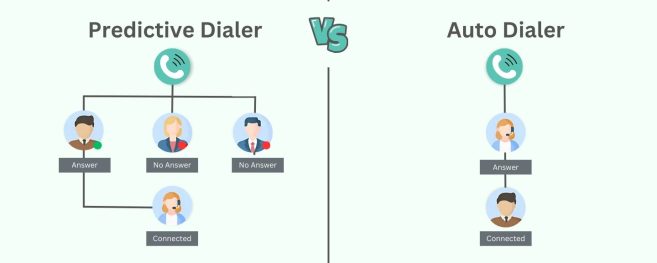
In today’s healthcare industry, ensuring efficient and timely communication with patients is essential. Call centers are central to managing patient inquiries, scheduling, and follow-up communications. A predictive dialer vs. auto dialer system can significantly impact how effectively a healthcare call center operates. By understanding their differences and benefits, healthcare providers can select the right solution to enhance patient engagement, improve agent productivity, and streamline the dialing process.
Key Takeaways
- Predictive dialers use AI to optimize call timing, connect answered calls to available agents, and increase agent productivity by reducing idle time.
- Auto dialers automate the dialing of phone numbers, efficiently connect calls to agents, and streamline center operations.
- Both systems improve call center efficiency but are suited for different purposes, especially when handling large call volumes in a healthcare setting.
- Adherence to compliance regulations, such as the Telephone Consumer Protection Act (TCPA), is essential when using either dialer.
Understanding Predictive Dialers in Healthcare

Predictive dialers have transformed call center operations by using AI-driven predictive dialing software that optimizes agent availability and connects answered calls immediately to agents. By automatically dialing multiple numbers, predictive dialers reduce idle time and ensure healthcare call center agents engage with patients without delays, maximizing productivity.
Key Features of Predictive Dialer Software
Predictive dialer software leverages real-time metrics to adjust dialing rates based on agent availability and previous call data. By connecting answered calls to agents, it minimizes wait times for patients, fostering a better patient experience. Additionally, this system filters out busy signals, voicemail, and unanswered calls, ensuring that agents spend more time interacting with patients.
For healthcare providers, this capability is invaluable for managing large call volumes, reducing patient wait times, and improving satisfaction through timely patient outreach.
Benefits of Predictive Dialers for Healthcare Call Centers
Incorporating a predictive dialer into healthcare call centers offers several benefits:
- Increased Productivity: Agents can handle a higher number of calls in less time, focusing on connecting with patients rather than managing repetitive dialing tasks.
- Enhanced Patient Engagement: By reducing call abandonment rates and automatically dialing the next call, predictive dialers improve patient engagement and satisfaction.
- Regulatory Compliance: Predictive dialers often include features to help call centers comply with TCPA regulations, reducing the risk of unwanted telemarketing calls and ensuring adherence to patient privacy standards.
Exploring Auto Dialers in Healthcare
Auto dialers automate the dialing process, calling a predetermined list of phone numbers and connecting answered calls to agents. Traditionally used in sectors like banking, auto-dialers are also valuable in healthcare for tasks such as appointment reminders, patient recall programs, and medication refill reminders.
Core Functionalities of Auto Dialers
Auto dialers streamline the calling process by managing a sequence of phone numbers and automatically dialing each one. When a call is answered, it is transferred to an agent, or if it goes to voicemail, a pre-recorded message can be delivered. This system helps healthcare providers ensure essential patient communications are handled efficiently, even when dealing with high call volumes.
Auto dialers are a great fit for routine communications, allowing healthcare providers to handle appointment confirmations, medication reminders, and general follow-up calls more effectively.
Advantages of Auto Dialers for Healthcare Providers
Using auto-dialers in healthcare offers notable advantages:
- Enhanced Efficiency: Auto dialers automate repetitive dialing tasks, enabling agents to focus on patient conversations rather than manual dialing.
- Cost-Effectiveness: By handling high volumes of calls, auto-dialers reduce operational costs, making them suitable for routine patient outreach.
- Compliance Features: Auto dialers often include TCPA-compliant options, helping healthcare providers manage calls responsibly and reduce legal risks.
Comparing Predictive Dialers and Auto Dialers in a Healthcare Setting

When evaluating auto dialer vs predictive dialer options for a healthcare call center, it’s important to consider the unique needs of patient communication. Predictive dialers are ideal for healthcare providers managing large patient outreach campaigns, requiring high levels of agent productivity and connection efficiency. Auto dialers, in contrast, are suited for structured call lists, such as routine reminders.
Impact on Agent Productivity and Patient Engagement
Predictive dialers minimize idle time by connecting answered calls immediately, allowing agents to spend more time with patients. Auto dialers also enhance efficiency by automating the calling process, but they don’t predict agent availability, leading to slightly less productivity in high-volume, unpredictable calling environments.
Scalability for Large Healthcare Organizations
For larger healthcare providers, predictive dialers offer better scalability, dynamically adjusting to call volume and agent availability. Auto dialers are best for stable, predictable call loads, such as weekly appointment reminders.
Compliance Considerations: Adhering to TCPA Regulations
Healthcare providers using either system must ensure compliance with TCPA and other privacy regulations. Predictive and auto-dialers help reduce legal risks by filtering unwanted telemarketing calls, maintaining patient privacy, and adhering to do-not-call lists. Predictive dialers often offer advanced features to adjust call rates in real time, further supporting regulatory adherence and patient satisfaction.
Optimizing Patient Communications with Dialer Systems
Healthcare providers can enhance their patient engagement strategies by using dialer systems to personalize interactions, integrate multi-channel outreach, and monitor call metrics. These tactics help optimize outbound calling strategies and make patient interactions more impactful.
Personalizing Patient Interactions
Dialers enable personalized patient interactions by using CRM data and patient history, allowing agents to address each patient’s needs directly. This personalized approach fosters patient loyalty and satisfaction, as patients feel more engaged and cared for.
Multi-Channel Outreach for Better Patient Reach
A multi-channel approach—integrating calls with email, SMS, and other patient communication channels—enhances patient engagement and ensures messages reach patients through their preferred channels. This strategy, combined with predictive or auto-dialers, supports patient-centered communication in healthcare settings.
Monitoring and Analyzing Call Metrics
Regularly reviewing call metrics helps healthcare providers identify trends, adjust calling strategies, and enhance call center performance. Metrics like call abandonment rates, average call duration, and connection success rates provide valuable insights to optimize patient interactions.
Potential Challenges with Dialer Systems
While dialer systems improve productivity, they come with potential drawbacks. Predictive dialers, for example, may experience abandoned calls when there aren’t enough agents available, causing possible patient frustration. Auto dialers may lead to dropped calls if a patient disconnects before an agent is available.
Managing Dropped and Abandoned Calls
Predictive dialing can result in higher call abandonment rates, especially when multiple calls are dialed simultaneously without sufficient agent availability. Auto dialers, while simpler, may still experience dropped calls in case of technical issues. By optimizing agent availability and call timing, healthcare providers can reduce these issues and improve patient satisfaction.
Choosing the Right Dialer System for Your Healthcare Organization

Selecting a dialer system that aligns with your healthcare organization’s needs involves considering the unique requirements of patient communication. By evaluating the features, compliance capabilities, and scalability of predictive and auto dialers, healthcare providers can make informed decisions to support patient engagement and operational efficiency.
Assessing Your Organization’s Communication Needs
Healthcare providers should assess their call center needs, determining whether they require high-volume patient outreach or structured appointment reminders. Predictive dialers are suited for large-scale campaigns, while auto-dialers excel in routine follow-ups and confirmations.
Conducting a Cost-Benefit Analysis
Understanding the costs associated with implementing a dialer system is essential. Healthcare organizations should evaluate the initial setup costs, ongoing operational costs, and potential ROI based on the system’s impact on productivity and patient satisfaction.
Future-Proofing Your Call Center
Choosing a scalable dialer system ensures that healthcare organizations can adapt to increasing patient volumes and evolving technology. By selecting systems that integrate with CRM platforms and support emerging communication channels, healthcare providers can future-proof their call center operations.
Choosing the Right Dialer for Your Business Needs
In conclusion, both predictive dialers and auto dialers offer unique advantages depending on the specific requirements of your business. Predictive dialers are ideal for high-volume calling environments where maximizing agent talk time is critical, as they can automatically adjust the dialing rate to ensure minimal downtime. On the other hand, auto dialers are more suited for simpler operations where efficiency and automation are key, allowing for streamlined processes that still effectively reach target audiences. Ultimately, the choice between these systems should be based on factors such as call volume, complexity of interactions, and the level of control needed over call pacing.
Sequence Health, a leader in healthcare call center solutions, understands the importance of effective patient communication and engagement. Specializing in patient conversion, Sequence Health offers comprehensive services that enhance visibility and facilitate meaningful interactions with patients. With expertise in managing healthcare-specific marketing and call center operations, we can help your organization achieve a seamless patient journey from initial contact to ongoing care. To optimize your healthcare call center operations and improve patient satisfaction, explore the innovative solutions we offer. Contact us today to discover how their tailored services can transform your patient engagement strategies.